Before service
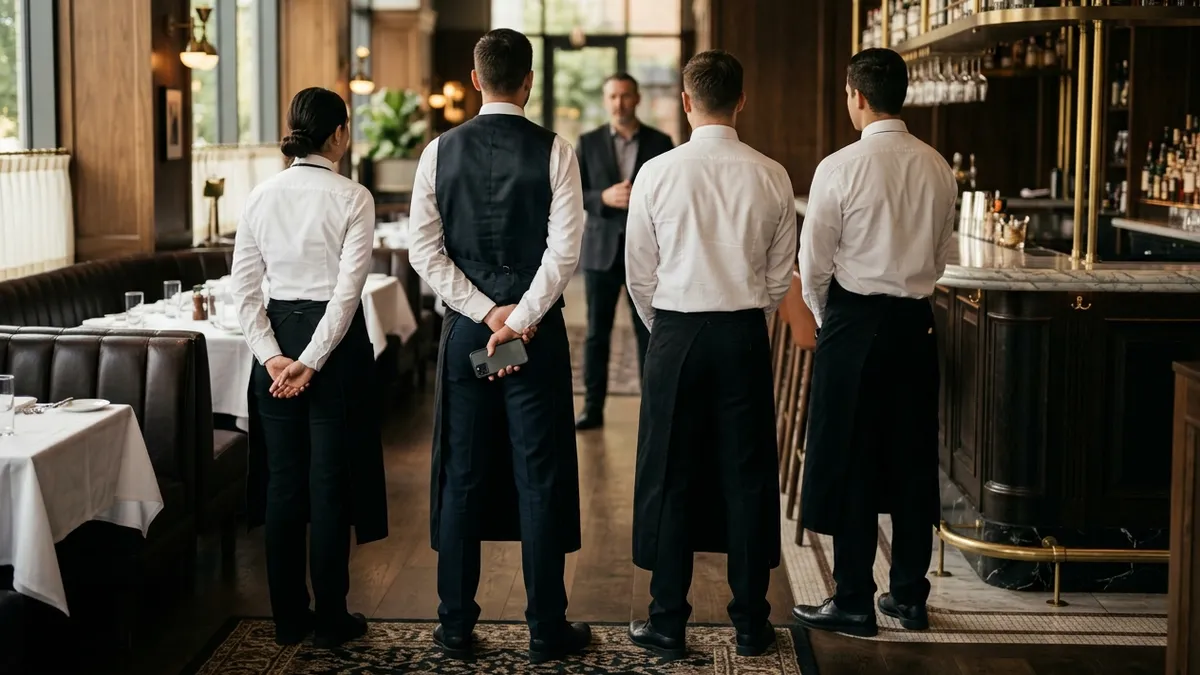
The briefing writes itself.
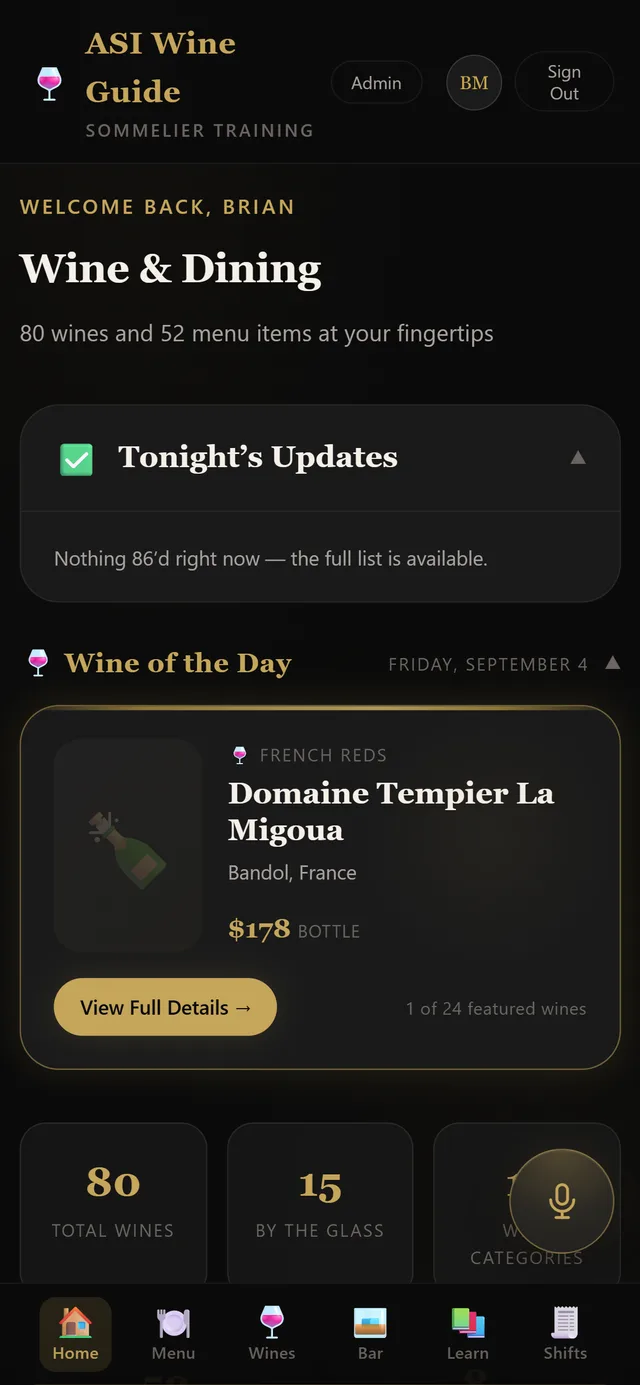
What is out tonight and what changed since you last worked, on every phone before the huddle. A wine of the day with a pairing checked against the real menu, not a plausible one.
Agentic systems for hospitality
We build agentic systems for restaurant groups and hotels: software that works the shift alongside your staff, scoped to how your house actually runs, and owned by you when it is done. The first one was built by the founder after fifteen years on restaurant floors, as a working demonstration of what a build can do. Servers who tried it asked to keep using it.
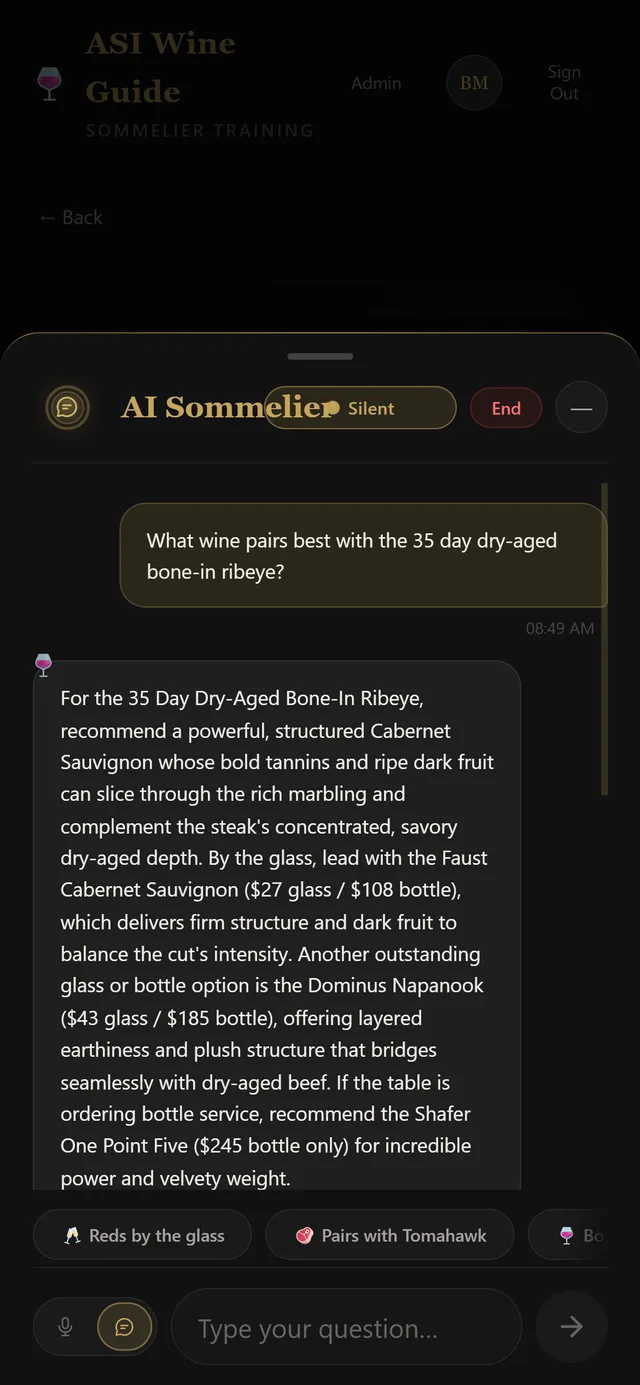
A real screen from the build, on the demo list. More of it
An agent we run on our own site, built on the same stack as every build. Ask her what you would ask us.
We run four restaurants. What would you actually build for us?
It starts with a shift on your floor. The most common first builds are answers at the table from the live list, allergen answers that cite your own sheet, and menu changes that reach every phone the same night. Want to see the one we built?
She answers from the same facts as this site, declines to quote prices, and hands you to a person for anything contractual.
The questions that stall a service, a demonstration build answering them, and how a build goes from your floor to a system you own.
Rather read it? Walk through the build
Not a dashboard somebody checks on Monday. Four moments in a service night, and what an agent does at each one. All of it works in the demonstration build today.
What is out tonight and what changed since you last worked, on every phone before the huddle. A wine of the day with a pairing checked against the real menu, not a plausible one.
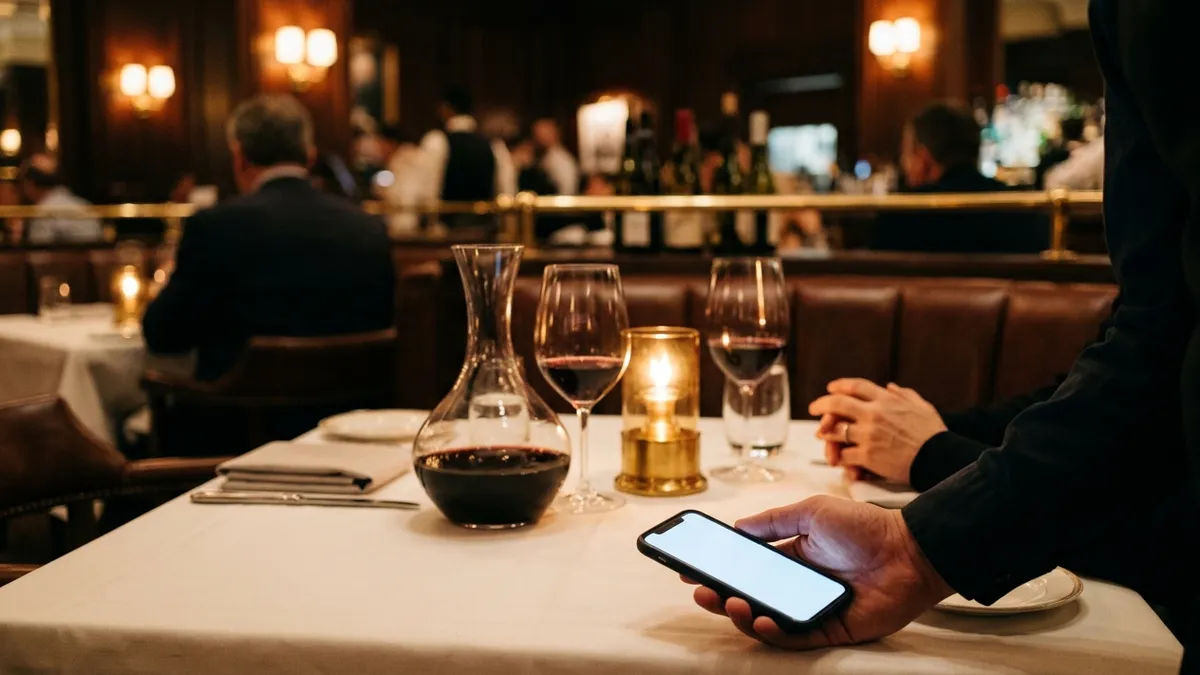
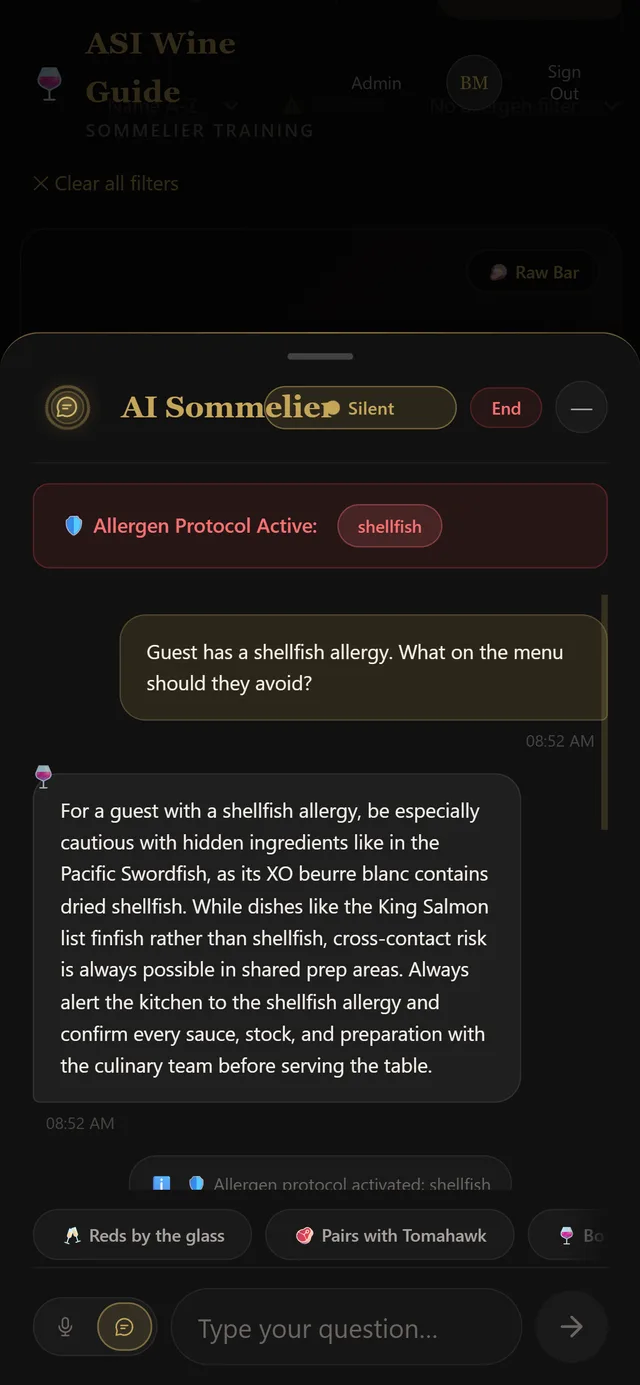
A server asks out loud or by text and gets an answer from tonight’s list in seconds. An allergen question comes back with the line from your own sheet. Someone says "86 the Caymus" and, once a manager approves it, every phone knows.
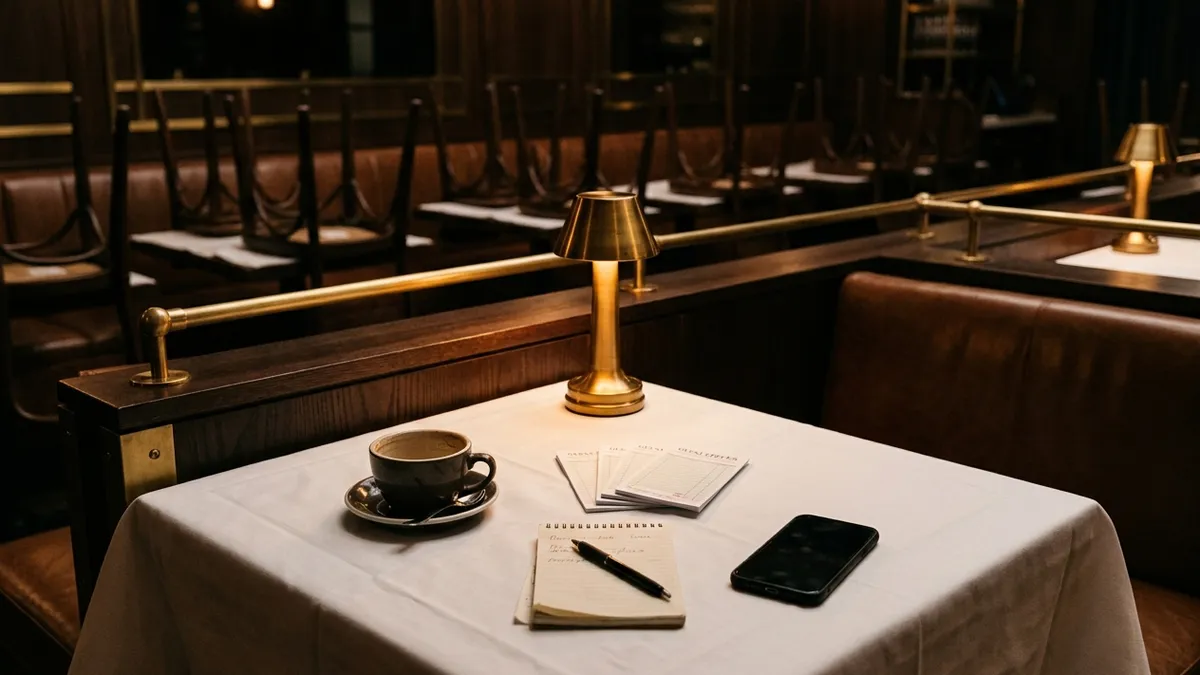
The closer captures the night in seconds and the rough notes become a proper service report. Where a house wants tickets captured too, payment and identity details are blacked out before anything is stored. The morning digest to the manager is built from the numbers, not written by a model.
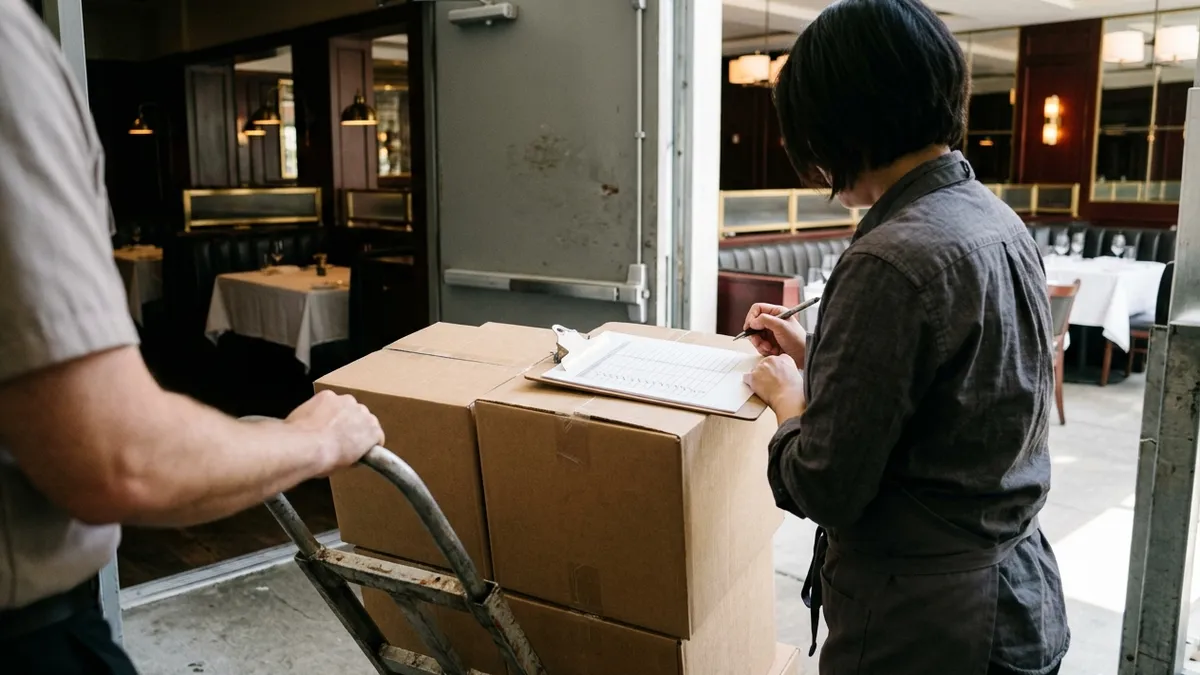
Point a camera at a supplier sheet and the list updates once a person approves it. New starters work through short modules on their phones, get their written answers graded, and rehearse a difficult table before they meet one.
Each one has a "today" that costs a house something every night. A build starts with the one that costs yours the most, and every part of it is scoped for your list, your menu, and your rules.
Wine, spirits, dishes, and allergens in one place, on the phone already in their pocket.
Working in the demo build Today, and with the agentThe line from your own allergen sheet, or "not recorded, ask the kitchen."
Working in the demo build Today, and with the agentPoint a camera at the supplier sheet. Approve the changes. Every phone updates.
Working in the demo build Today, and with the agentShort modules on the phone, written answers graded, and practice on a difficult guest.
Working in the demo build Today, and with the agentWhat was 86’d, who complained, what changed, captured at close and briefed tomorrow.
Working in the demo build Today, and with the agentInvoices, supplier sheets, and the inbox, read and filed, with an interruption only when something changed.
Running on our own paperwork Today, and with the agentThe ASI Wine Guide is a working demonstration of a floor system for a steakhouse: the list, the menu, and the allergen sheet on every phone; an assistant that answers from tonight's list; menu changes by camera; training with graded answers; shift notes that become the morning briefing. A few working servers asked to use it, and do.
It is not a product and it is not for sale as is. It is what we would build for your house, starting from your floor.
Walk through the buildIt starts on your floor and ends with a system you hold. You always know what is being built, what it costs, and what happens next, including the six months of tuning after it goes live, which are part of the price.
A shift alongside a closing server. Thirty minutes with whoever trains new starters. The list and the allergen sheet as the kitchen actually uses them. You score what each fix is worth to the house; we score what it takes to build; the order comes out of both. It ends in a written roadmap and a fixed quote, signed off on your portal board.
Working screens reach staff phones early and get used on real shifts while the rest is built. Every change is posted to your board as it lands, so you review software that exists rather than slides about software that might.
The system is yours: running in a cloud project you hold, defined in code in your repository, documented well enough that another engineer could pick it up. Nothing runs on our side, so nothing switches off if we part ways.
Real shifts surface what no build can predict: the questions guests actually ask, the dish that parses badly, the answer that lands wrong at a table. For six months we tune the system against that evidence and keep it reliable. It is part of the project price, not a contract sold back to you afterwards.
Progress, decisions, and the quote all live on a private board in your client portal, the same one every client signs into. Nothing is agreed in an email thread.
No seats to license and no subscription standing between your staff and your own list. We build it, hand it over, and would rather earn the next build than hold this one hostage.
More about how we operateWe create it and hand it over. You hold the account and the billing, not us.
Readable, documented, and yours to change, extend, or hand to another engineer.
The list, the menu, the training records, the shift history. Nothing is held back.
End the relationship and nothing switches off, because none of it was ever running with us.
Each one gets a full build, the founder on the floor for the assessment, and first call on our capacity. In return we ask for a published case with your name and your results once the fit period ends, and candid feedback along the way. If your house has a problem that shows up every night, this is the moment to bring it.
ASI goes back to a crude chatbot Brian built years ago that knew the wine list, and the evening it described his favorite bottle with a word neither he nor the house’s advanced sommelier had heard. He sold two bottles on that description. He builds for the person who has to use the tool mid-shift, because he has been that person.
The whole storyEvery build opens with a free conversation about what goes wrong on your floor most nights, and an honest read on whether a build is worth your money right now. If it is not, we will tell you.
Prefer email? contact@asisystems.io
Amanda
ASI's AI concierge
Meet Amanda — our AI concierge, built the way we build for clients. Ask what we do, how an engagement works, or whether your data problem is one we can solve. She can speak, listen, show you around the site, and pass your details to the team — in any of about 70 languages, so use whichever you'd rather speak.