Built by someone who has worked the shift.
Artificial Systems Integration builds agentic systems for restaurant groups and hotels: one house at a time, scoped on its own floor, and owned by the client when it is done. The company exists because the founder spent fifteen years in restaurants and then found that nobody was building this for them.
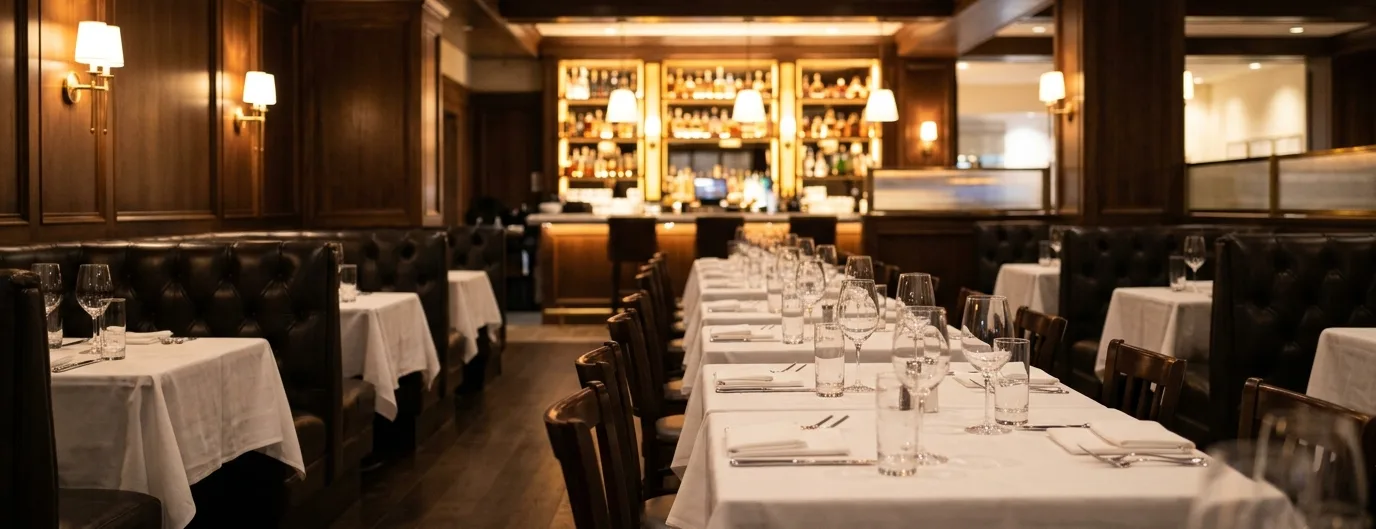
ASI's story starts a few years before the company did, on a restaurant floor, with a crude chatbot Brian Myers had built as a side project. It was not sophisticated, but it knew the wine list.
One day he asked it about his favorite wine, Château de Beaucastel. It came back with a beautiful description built around a word he had never heard: garrigue. He asked the restaurant's advanced sommelier, who had never heard it either. They looked it up. It is the wild Mediterranean scrub around the vineyards of the southern Rhône, thyme and rosemary and lavender on sun-baked limestone, and a niche term for the herbal edge those wines carry. That evening Brian used the description almost word for word and sold two bottles.
That was the moment the tools stopped being a novelty. Deep knowledge locked in a book or in one expert's head does not help when a guest asks a question right now. Put it in the hands of the person at the table, at the moment they need it, and every server on the floor gets better at once. ASI was founded on that idea, fifteen years into a restaurant career, and the first system it built was a working demonstration of exactly that: the list, the menu, and the allergen sheet on every phone, an assistant that answers from tonight's list, training that fits before a shift, and shift notes that outlive the shift. A few working servers asked to use it, and do.
The word build is meant literally. We are not selling access to a platform we own. Each system is scoped for one house, stood up in a cloud project we create and hand over, and owned by the client from the first day to the last. There are no seats to license and no subscription standing between your staff and your own list. If you decide to bring it in-house or hand it to another engineer, that is a handoff conversation, not an extraction project.
The pattern we see in restaurants is consistent. The knowledge exists: a thorough training binder, a beverage director who knows every bottle, a kitchen that knows every allergen. None of it is where the server is standing when the question comes. Someone tries an app that impresses in the demo and falls apart against the real list, and the conclusion drawn is that this does not work for restaurants. The actual problem was that nobody built it for this restaurant.
That work is unglamorous. A list that reaches every phone within a minute of a change. An allergen sheet reconciled with what the kitchen actually does. Redaction that runs before a ticket scan is stored. A grader that checks facts against the live list so it never tells a server a real wine is invented. None of it demos well. All of it decides whether the thing is still in use six months in.
Every build then includes six months of fitting after it goes live. Real shifts surface what no build can predict, and that half-year is when a system stops being what we thought you needed and becomes what you actually needed. It is priced into the project rather than sold back to you once you are dependent on it. Anything beyond that is a separate, cancellable arrangement, and ending it switches nothing off, because none of it was ever running on our side.
What we hold to
Built for the person on the shift
Not for a procurement committee. If a server cannot use it one-handed at a table with a guest waiting, it is not finished.
Transparency
You understand what was built, why it was built that way, and what it costs to run. Readable code and plain-language documentation are not optional.
Sustainability
Systems designed to evolve with the house rather than calcify into technical debt. The investment should compound, not depreciate.
Security
Guest data is handled like guest data. Redaction before storage, private archives, least-privilege access, designed in at the start rather than bolted on before a review.
Operator and engineer, the same person
The person you talk to builds it
No account managers, no handoff from a sales team to a delivery team, nobody translating your problem into a ticket for someone you will never meet. Scoping conversations are technical and honest from the first call.
A few builds at a time
Custom work is slow to do well, and we would rather do it well. The trade is deliberate: fewer projects at once, each one done by the people who understand it.
Fixed scope, fixed quote
The assessment ends with a written roadmap and a price for it. No open-ended hourly billing, and the six months of tuning after launch are inside that number.
A person approves what a model proposes
Menu edits, sell lines, an eighty-six. The model drafts and resolves; a manager says yes. Where a confidently wrong answer would cost the house, code decides instead of the model.
All of it, from the first day
Your cloud project
We create it and hand it over. You hold the account and the billing, not us.
Your code, in your repository
Readable, documented, and yours to change, extend, or hand to another engineer.
Your data, exportable any time
The list, the menu, the training records, the shift history. Nothing is held back.
Nothing on our side
End the relationship and nothing switches off, because none of it was ever running with us.
The same pattern, in other organizations
The agents in a restaurant build have a shape that travels: read what arrives, keep a record, brief the people who need it, and only interrupt a person when something changed. We run it on our own paperwork, and in August 2026 we built it in public as EDGAR Sentinel, an agent that reads SEC filings every morning and emails what changed. If your organization has a pile that changes quietly and matters when it does, the conversation is the same one.
Everything we build runs on Google Cloud, deliberately. One ecosystem learned properly means faster builds, fewer moving parts, and a running cost we can tell you before we start. Cloud Run, Firestore, Cloud Scheduler, and Gemini do most of the work; every AI call is metered so the cost is a number you can see.

The first conversation costs nothing.
Bring the thing that goes wrong most nights. We will tell you what it would take to fix it, what it would cost, and whether it is worth doing at all.
Prefer email? contact@asisystems.io