The build

What a build for one restaurant looks like.

The ASI Wine Guide is a working demonstration of a floor system for a steakhouse: the list, the menu, and the allergen sheet on every phone, an assistant that answers from tonight's list, menu changes by camera, training with graded answers, and shift notes that become the morning briefing.

The founder built it to show what a build can do, on a full list and menu rather than a toy one. A few working servers asked to use it, and do, which is a better test than any demo script. It is ASI's own system, not a client engagement, and it is not for sale as is. It is what we would build for your house, starting from your floor.

Where a floor loses time

Six things the assessment looks for.

Every build starts the same way: a shift beside a closing server, half an hour with whoever trains new starters, and the list and the allergen sheet as the kitchen really uses them. These are the six places most houses turn out to be losing time, and the six the demonstration build was designed around.

The wine list

Maintained by hand. The printed version and the working version drift apart within a week of any change.

The allergen sheet

The column rarely matches what the kitchen actually does. On most floors this is the single riskiest gap.

Training material

Thorough, and almost nobody opens it after their first week. The problem is reach, not content.

Shift notes

Written and discarded daily. Everything learned on a Friday is gone by Saturday.

Supplier sheets

Re-typed by hand into the list, which is where most of the errors enter.

Sales history

The cleanest data in the building, used for nothing but accounting.

What got built

An agent at every moment of the shift.

Everything below works in the demonstration build today. Nothing on this page is planned.

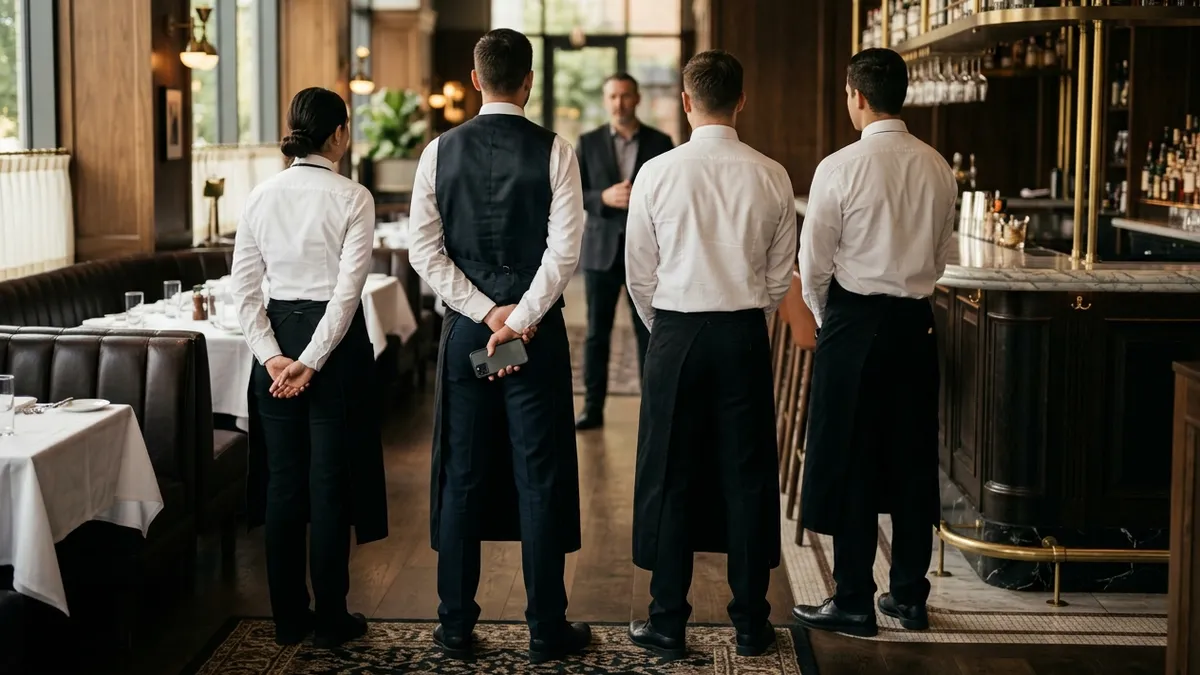
Servers lined up for a pre-shift briefing near the bar, one holding a phone behind his back.
Before service
  • A pre-shift briefing: what is out tonight and what changed since you last worked, derived from the live list and the change log rather than a memo somebody has to write.
  • A wine of the day chosen each night, with a sommelier’s take and a pairing checked against the real menu. The pairing rule exists because an early version once suggested a dish the menu did not have.
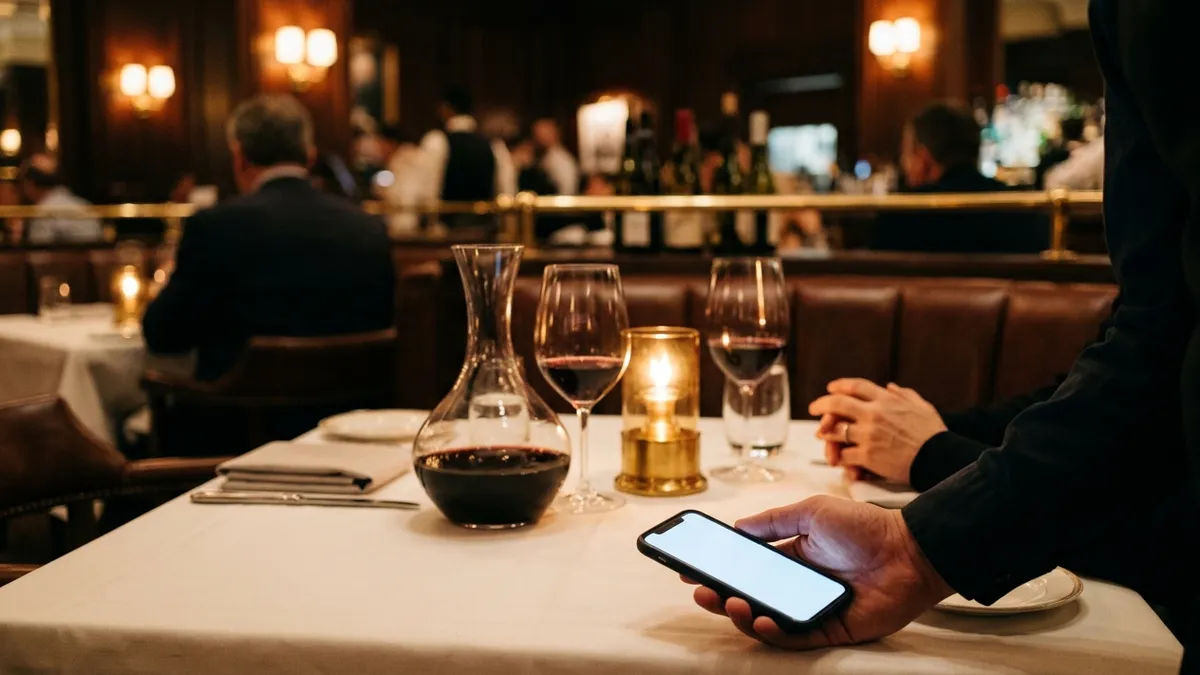
A server holding a phone at the edge of a set table, a decanter and two glasses of red wine beside it.
During service
  • An assistant a server can talk to or type to, answering from the same list the floor is pouring, with bottle cards and prices.
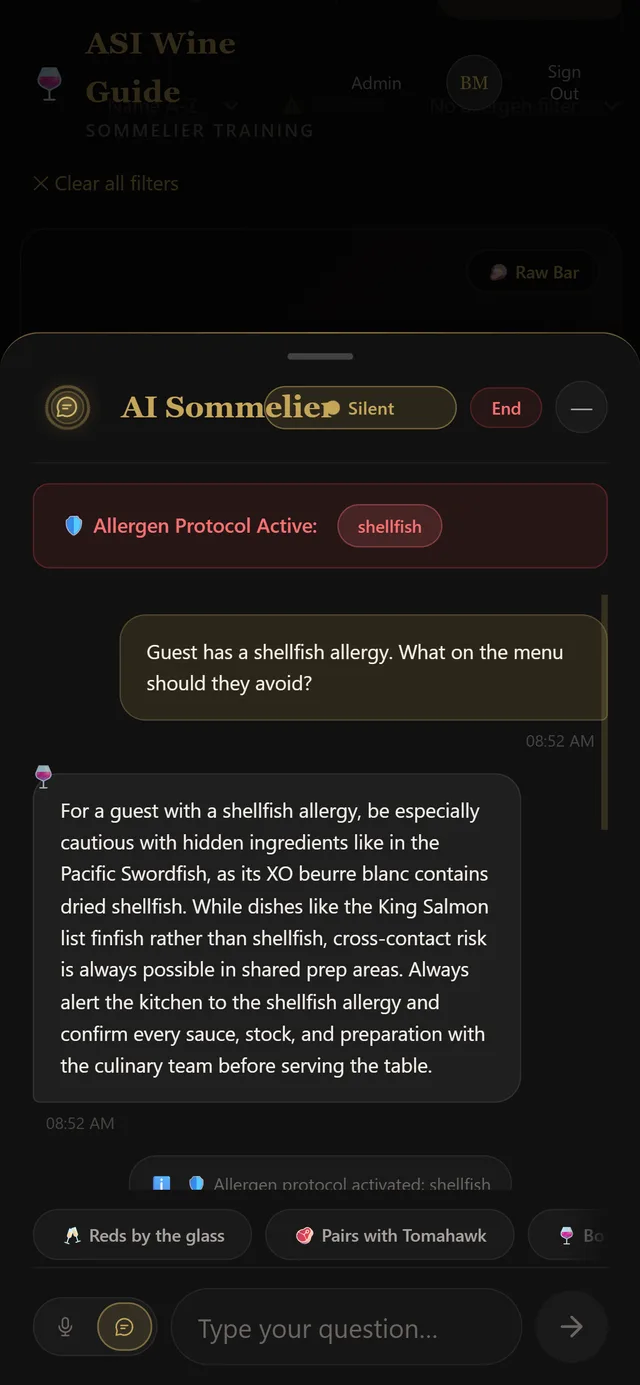
  • An allergen protocol: a guest mentions shellfish and every answer is checked against the sheet, conflicts are flagged, and where the sheet is silent it says so.
  • "86 the Caymus," said in plain language, resolved against real bottles before anything is proposed, and applied only when a manager approves.
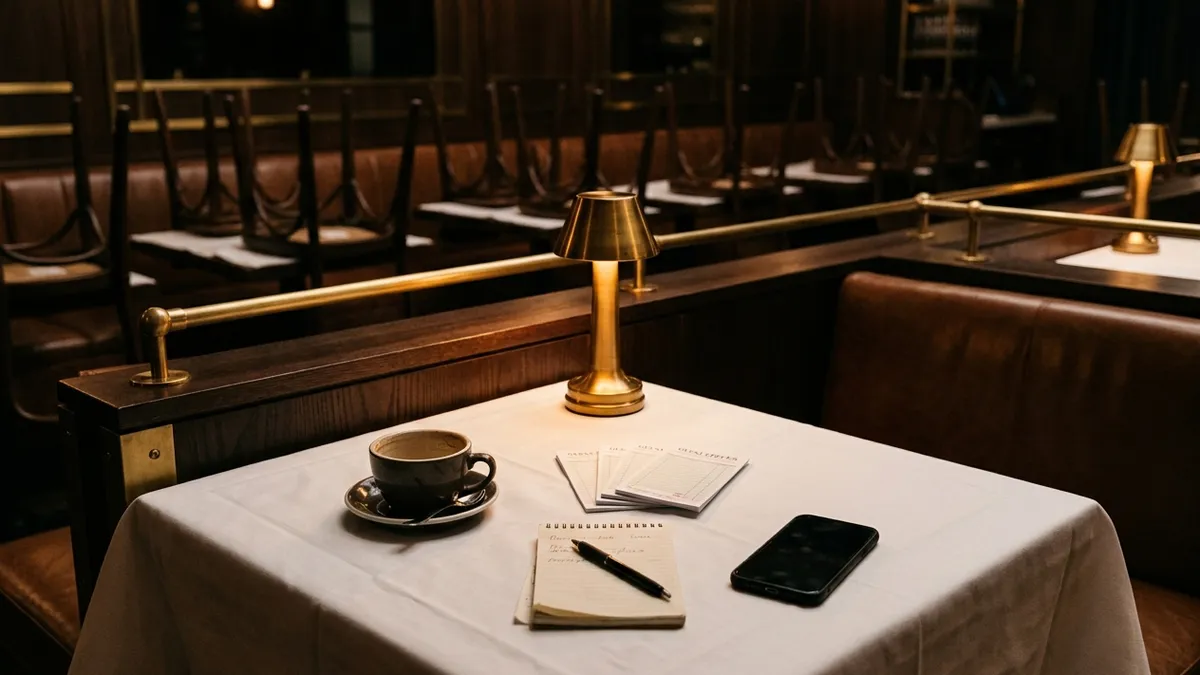
A cleared table at close with a notepad, a stack of guest checks, a coffee, and a phone, chairs up on the tables behind.
After service
  • An end-of-shift report drafted from the closer’s rough notes and cross-checked against the night’s tables, for the closer to correct and sign.
  • Ticket capture built with redaction first: where a house wants the tickets kept, payment and identity regions are blacked out before anything is stored and the originals go to a private archive.
  • A morning digest for the manager: the live 86 list, menu changes, feedback filed, shifts committed, and the day’s AI spend. Every number is a query result, so it can be trusted the way a report is trusted.
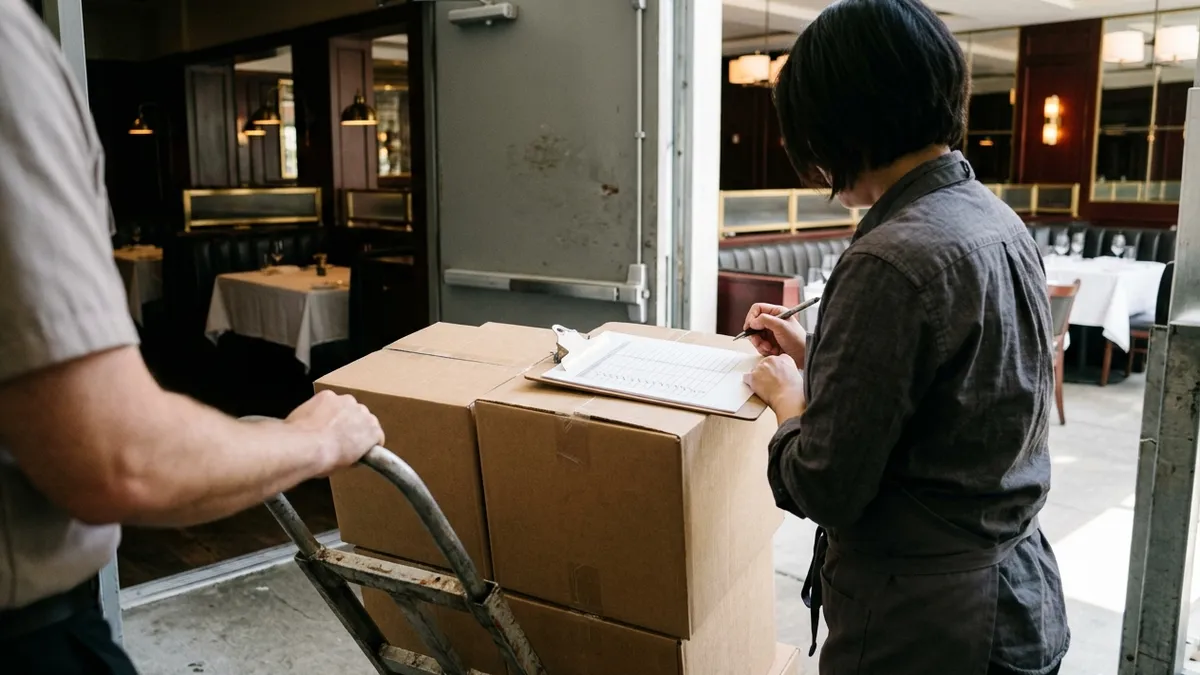
A morning wine delivery at the back door, a manager checking the sheet on a clipboard.
Between shifts
  • Menu and list changes by camera or PDF, proposed as a batch a manager reviews line by line. Every phone updates within a minute of approval.
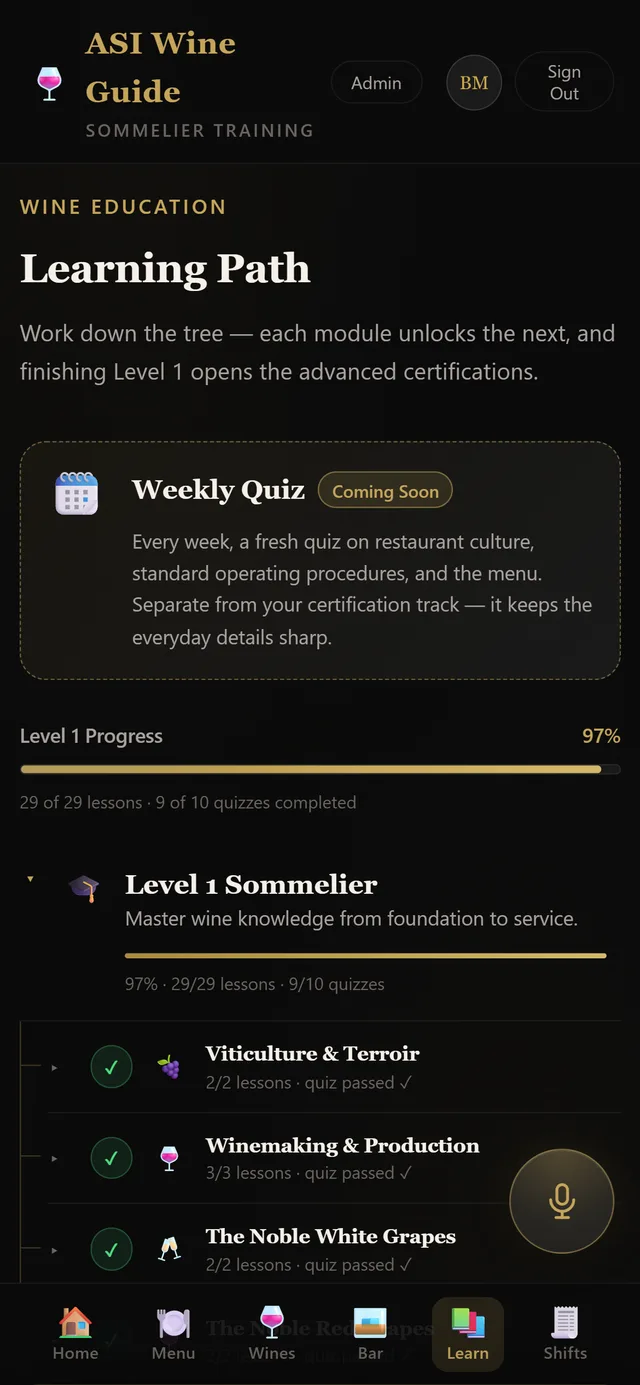
  • Training tracks for wine, whisky, and agave, with written answers graded against a rubric, a certification at the end, and a manager view of who has finished what.
  • A guest simulator: a difficult table, played by a model, graded on what the server actually said, with a grader that checks facts against the live list so it never marks a real wine as invented.
The screens

On a server's phone.

Captures from the demo list. No venue or staff are named anywhere, and no results are quoted, because a demonstration does not have any worth quoting.

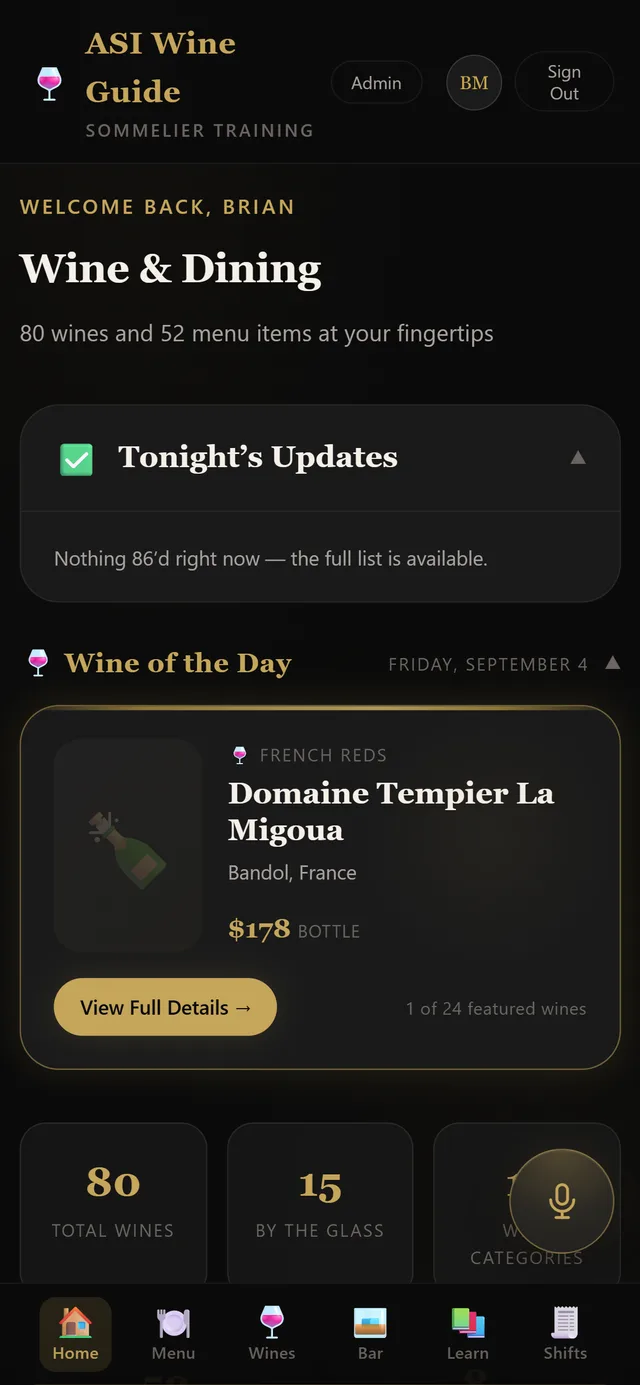
The home screen: tonight’s updates, the wine of the day, and the counts.
Home: tonight’s updates first, then the wine of the day.
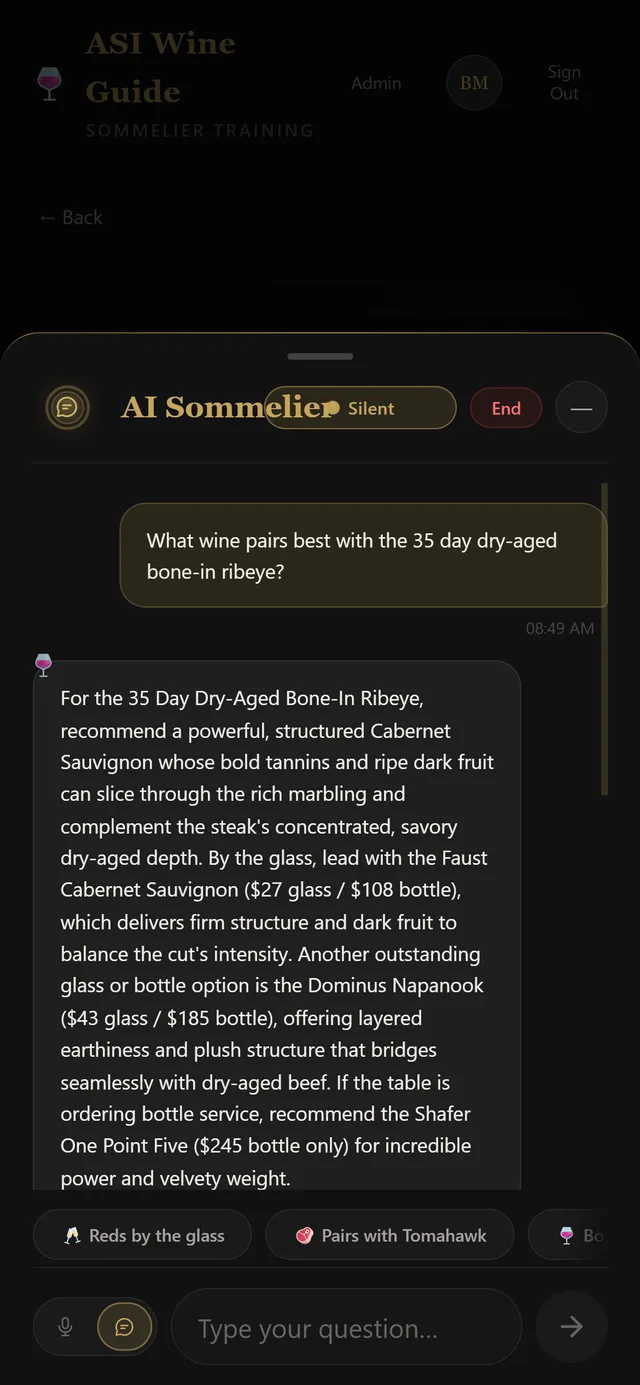
The assistant answering a pairing question with three bottles from the list.
The assistant, asked what pairs with the ribeye.
The assistant in allergen protocol for shellfish.
Allergen protocol: shellfish. Every answer checked against the sheet.
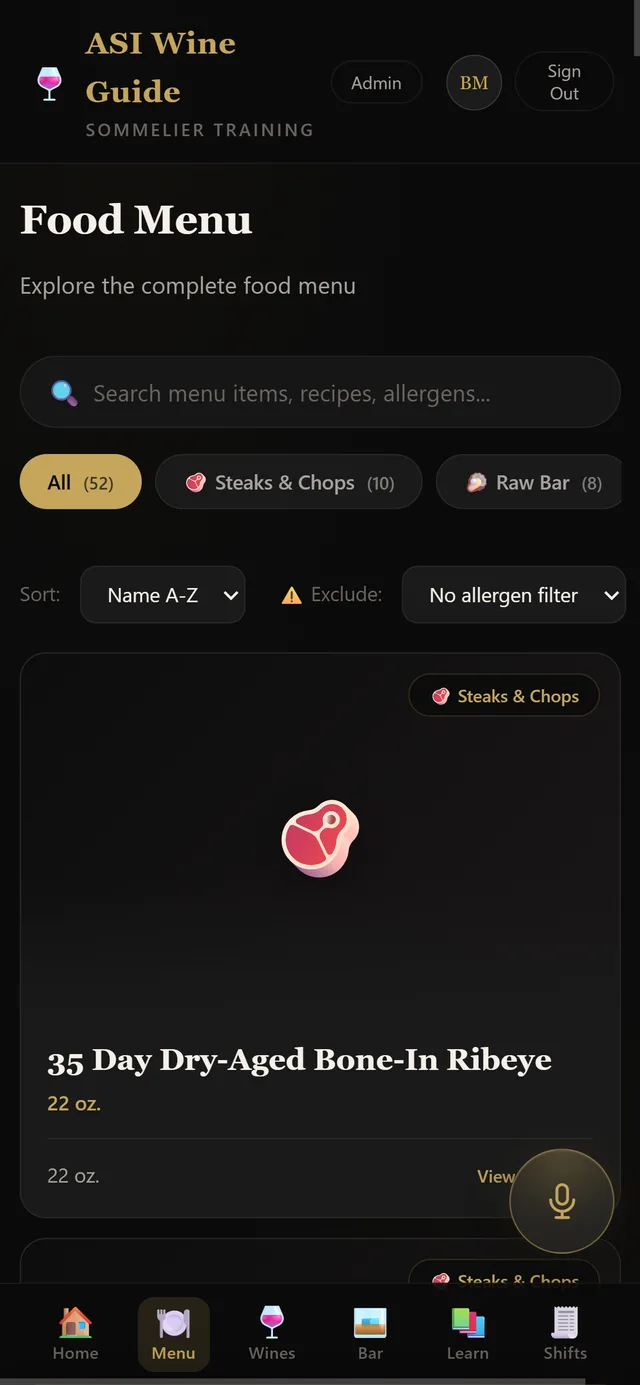
The food menu with category and allergen filters.
The menu, with an allergen filter on every screen.
The learning path with module progress.
The learning path. Modules unlock in order; progress carries over.
What it demonstrates

The habits every build gets.

A person approves every change

The model proposes menu edits, drafts sell lines, and resolves "86 the Caymus" to a bottle. Nothing is written until a manager says yes, because a confidently wrong price is worse than no price.

The agent reads the floor’s list, not a copy

The by-the-glass list the assistant answers from is the one the floor is pouring. One store, one version, every phone within a minute.

Trust is built from what can be checked

The morning digest is queries, not prose. The simulator’s grader verifies against live data. The allergen mode refuses to guess. Where a model could be confidently wrong, code decides instead.

Guest data is handled like guest data

Redaction runs before storage. The archive is private. Staff sign in with a whitelist, and every AI call is metered to the account that made it.

What it is not

It is not a product, and you cannot buy it as it stands. A steakhouse's list, menu, house rules, and training are its own, and a hotel's are different again. What you can have is a build that starts the way this one did: on your floor, with your list, scoped to the moments that cost you the most, and owned by you when it is done.

Artificial Systems Integration

Start where this one started, on your floor.

Tell us what goes wrong most nights. We will tell you what it would take to fix it, what it would cost, and whether it is worth doing at all.

Prefer email? contact@asisystems.io